We’ve all done it—telling ourselves “Just five more minutes” only to look up and realise an hour has passed. This habit has a name: doomscrolling. And while it often feels like a lack of willpower, the truth is, apps are designed to keep you hooked.
Humans are wired to seek information. Psychologists call it the novelty effect—our brains release dopamine every time we encounter something new. Scrolling endlessly feeds this craving, giving us tiny “hits” of reward with each swipe. Studies show that the unpredictability of social media—what might appear next in your feed—activates the brain’s reward pathways, similar to the effects seen in gambling or other addictive behaviours.
Add to that our negativity bias—our natural tendency to pay more attention to alarming or dramatic news—and you’ve got the perfect storm. We scroll to find “the next thing,” but stay stuck because the most dramatic headlines grab our focus and hijack our emotions.
Social media platforms aren’t just digital spaces — they’re attention ecosystems designed to keep you engaged for as long as possible. Every scroll, click, and pause provides data that helps platforms learn what keeps you hooked. Behind every “endless feed” lies decades of behavioural science, persuasive design, and user experience research fine-tuned to one goal: keep you scrolling.
Here’s how they do it:
1. Infinite Scroll — The Endless Feed That Never Stops
The infinite scroll feature was introduced by UX designer Aza Raskin in 2006, originally as a way to improve user experience by removing the need to click “next page.” Ironically, it became one of the most powerful mechanisms of digital addiction.
By removing natural stopping cues (like page breaks or loading pauses), infinite scroll eliminates the tiny moments that might remind us to stop. Psychologists call these “decision points”—brief pauses where our brains can evaluate whether to continue. Without them, users lose track of time and enter what researchers call a “flow trap”—a state of passive engagement that can last for hours.
A Frontiers in Psychology study (2022) found that continuous content exposure reduces self-control and increases compulsive use, especially during emotionally heightened periods (like the pandemic). People weren’t consciously choosing to scroll longer; the design made it effortless to do so.
2. Variable Rewards — The Slot Machine Effect
Ever notice how sometimes your feed is boring—and then suddenly, something hilarious, emotional, or shocking pops up? That unpredictability is no accident. It’s based on what behavioural psychologists call variable ratio reinforcement—the same principle behind slot machines and gambling behaviour.
Every scroll brings the possibility of something rewarding — a funny meme, breaking news, a viral clip — and that uncertainty keeps you hooked. The human brain releases dopamine not just when we receive a reward, but in anticipation of one. So, the potential for something interesting is what keeps us scrolling.
This mechanism is so powerful because neuroscience shows that unpredictable rewards trigger stronger dopaminergic responses than predictable ones, reinforcing habits more effectively. In one study on reward processing, researchers found that unexpected rewards activated the brain’s reward centers (like the nucleus accumbens) far more intensely than predictable outcomes—essentially strengthening the habit loop each time.
And when you combine that with emotionally charged content—fear, anger, outrage—the reward loop becomes even more potent. It’s the digital equivalent of pulling a lever again and again, waiting for the jackpot of engagement.
3. Personalised Feeds — Algorithms That Learn You Too Well
Social media algorithms are constantly learning what you like, save, or linger on. The longer you engage with certain types of posts — say, dramatic headlines or emotional content — the more the algorithm feeds you similar material.
Research shows this isn’t accidental. Platforms are built to maximise engagement, not necessarily accuracy. A 2025 study by Milli et al. found that algorithms tend to amplify divisive or emotionally charged posts because they keep users scrolling longer. This creates a feedback loop where your feed reflects not just your interests, but also your emotional triggers — shaping how you perceive the world, often without you realising it.
In the short term, doomscrolling can spike anxiety and stress. Psychologists have found that repeated exposure to distressing or negative news content activates the body’s stress response, raising cortisol levels and heightening anxious feelings.
Over time, this habit begins to erode sleep, focus, and productivity. A Nanyang Technological University study (2025) found that constant social media use trains the brain to crave novelty, making it harder to sustain deep focus or rest. Blue light exposure from screens also disrupts our natural circadian rhythm, making it more difficult to fall asleep—especially when scrolling at night.
And while doomscrolling may feel like a way to “stay informed,” research suggests the opposite. Studies on information overload show that consuming excessive or repetitive news reduces our ability to process and retain meaningful information, leading to emotional exhaustion instead of understanding.
In one large-scale study, researchers found that people exposed to too much information experienced message fatigue, a decline in both motivation and cognitive ability to engage deeply with content (Mao et al., 2022).
Another study revealed that doomscrolling predicts existential anxiety and pessimism, as users internalise constant negativity without gaining clarity or solutions (Shabahang et al., 2024).
In short: we may feel more plugged-in—but the outcome is often greater emotional load, not greater insight.
Doomscrolling isn’t going away, but awareness helps. Practice these simple steps:
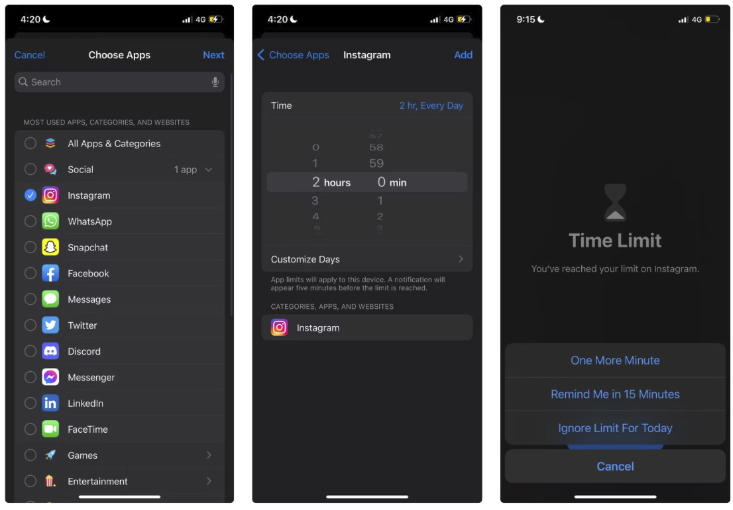

Doomscrolling isn’t a flaw—it’s a feature. Apps are engineered to capture attention, and our brains are wired to oblige. By understanding the forces at play—novelty, dopamine, negativity bias, and algorithmic reinforcement—we can learn to scroll more intentionally, not compulsively.
Because the truth is, the goal isn’t to stop scrolling altogether—it’s to stop letting the scroll control you.
Enjoyed the article? Follow us on LinkedIn for more updates and insights!
Click here to read more of our articles!
Image Source: Freepik
.png)